
India and the US are expected to have smooth trade negotiations after US President Donald Trump and Indian Prime Minister Narendra Modi had a productive meeting during Modi's visit to the White House last month, Stephen A Schwarzman, chairman, chief executive officer, and co-founder of one of the world's largest alternative investment firms, Blackstone Group, said in Mumbai on Wednesday.

The Securities and Exchange Board of India (Sebi) may allow non-resident Indians (NRIs) and Overseas Citizens of India (OCIs) greater exposure to domestic equities if their investments are sent through foreign portfolio investors (FPIs) registered at the GIFT City International Financial Services Centre (IFSC). The proposal will be taken during Sebi's board meeting on Saturday along with other key agenda items such as easing of voluntary delisting mechanism and introduction of a regulatory framework for real estate fractional ownership platforms, said people in the know. At present, the combined holdings of NRIs and OCIs in a global fund have to be less than 50 per cent, while that of a single NRI or OCI is capped at 25 per cent.

Vedanta Resources (VRL), the diversified mining company headquartered in London, is giving final touches to a plan to raise up to $2.5 billion (about Rs 20,800 crore) as debt repayment deadlines near. The company owned by billionaire Anil Agarwal plans to do this by a combination of instruments, including issuing preference shares in the holding company to a slew of offshore investors from West Asia, and taking on another loan to refinance older debt at a higher interest rate. VRL, which is the group's holding company, is also looking to sell part of its 63.71 per cent stake in the Indian listed subsidiary Vedanta Ltd to meet funding requirements, said a banker close to the development.

'Growth for some companies has been hard to come by and this is a smart way to get there.'

Implications for capital gains, wealth taxes, and investment strategies require careful consideration, notes Anil Rego, founder and CEO, RightHorizons.

Ask rediffGURU and PF expert Milind Vadjikar your insurance, stocks, mutual fund and personal finance-related questions.

A fundraising boom in the domestic market and tightening of the regulatory framework for overseas issues are responsible for this trend.

US strikes on Iran's three main nuclear facilities have once again raised concerns that Tehran might shut down the Strait of Hormuz - one of the world's most critical chokepoints, through which a fifth of global oil and gas supply flows.

The Union Finance Ministry on Friday announced key amendments to foreign exchange (forex) regulations, including mandating government approvals for all investments originating from countries that share land borders with India. The latest amendments also seek to simplify cross-border share swaps and streamline key definitions, such as "control". The updated regulations have aligned the treatment of downstream investments made by overseas citizen of India (OCI)-owned entities with those owned by non-resident Indians (NRIs) on a non-repatriation basis.

Foreign direct investment in India jumped 47.8 per cent to $16.17 billion in April-June this fiscal on healthy inflows in services, computer, telecom and pharma sectors, according to government data. FDI inflows were at $10.94 billion in April-June 2023-24. The data showed that overseas inflows in May rose to $5.85 billion and in June to $5.41 billion from $2.67 billion and $3.16 billion, respectively, in the year-ago period.

Net NPAs increased to Rs 36,260 crore in the December quarter from Rs 34,843 crore in September and Rs 33,116 crore in December 2023, observes Tamal Bandyopadhyay.

The value of the foreign portfolio investors (FPI) holdings in the domestic equities reached $592 billion in three months ended June 2021, a surge of 7 per cent from the preceding quarter, according to a Morningstar report. This was largely on the back of robust net inflows from FPIs, coupled with the strong performance of the Indian equity markets. "As of the quarter ended June 2021, the value of FPI investments in Indian equities stood at $592 billion, which was considerably higher than the $552 billion recorded in the previous quarter, a spike of around 7 per cent," the report noted. As of June 2020, the value of FPI investments in Indian equities had been $344 billion.

Foreign portfolio investors (FPIs) have net sold domestic shares worth over $10 billion so far this month amid a shift to China, which not only offers attractive valuations compared to India but has also announced several measures to support the economy and the stock market in recent weeks. If the trend doesn't reverse, this will be the first time that overseas funds will yank out more than $10 billion from Indian equity markets in a month.

There remains a debate on who said this: "When the facts change, I change my mind. What do you do, Sir?" Was it the British economist John Maynard Keynes or the American economist Paul Samuelson. Irrespective of who said it, this sentiment appears to have found resonance in ITC's boardroom in recent years.

The value of foreign portfolio investors' (FPI) holdings in domestic equities reached $654 billion in three months ended December 2021, a drop of nearly 2 per cent from the preceding quarter, according to a Morningstar report. This was largely on the back of a massive sell-off by foreign investors and a correction in the Indian equity markets, especially in the large and mid-cap sectors. "At the end of the quarter ended December 2021, the value of FPI investments in Indian equities fell to $654 billion, which was lower than $667 billion recorded in the previous quarter, a fall of around 2 per cent," the report noted.

'The market's sharp decline recently has shaken the confidence of retail investors, leading to increased selling.'

'By investing in a basket of funds, FoFs can help minimise the impact of underperforming funds, thus reducing overall investment risk.'

Several mutual funds (MFs) have recently approached the Reserve Bank of India (RBI) as they renew efforts to increase their overseas investment limit. In June 2022, the capital markets regulator Securities and Exchange Board of India (Sebi) permitted MFs to invest in foreign stocks within the aggregate mandated limit of $7 billion after a correction in stocks. One of the proposals shared with the RBI is to link MFs' foreign investment limit to the country's foreign exchange reserves.
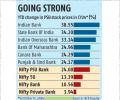
Stock Market News today, PSU banks: The year 2024 was a roller-coaster ride for Indian stock markets, marked by volatility driven by the Lok Sabha elections, Union Budget 2024, a slowdown in corporate earnings, and sticky inflation. Geopolitical tensions - particularly between Israel and Iran in West Asia - along with various stimulus announcements by China and yen carry trade rocked the equity markets throughout the year.

Canada's foreign direct investment (FDI) into India doubled after the pandemic years even as India's own investments into Canada show signs of slackening in recent years. The cumulative equity FDI inflows from Canada rose from $1.8 billion in March 2019 to $3.9 billion in March 2024, shows data from the Department for Promotion of Industry and Internal Trade (DPIIT). The overall share is up from 0.42 per cent to 0.57 per cent during the same period, suggesting that Canadian FDI grew faster than overall FDI during this period

Dalal Street minnows stole the show in 2024, giving handsome returns to investors, helped by a largely optimistic trend in the stock market and impressive retail investors' participation. Analysts attributed the positive trend in the equity markets, where the benchmark indices shattered many records this year, to robust domestic liquidity, strong fundamentals of the Indian economy, and policy continuity.

The net outward foreign direct investment went up from $9.1 billion in 2017-18 to $12.6 billion in 2018-19 and moved further north to $13 billion in 2019-20.

Fund mobilisation by companies through equity and debt routes has dropped 20 per cent in 2022 to nearly Rs 11 lakh crore, as exuberance dwindled this year due to expensive credit avenues and volatile markets. The first half of 2023 could continue to remain challenging. The year 2021 was extraordinary for fundraising from the equity and debt routes, while 2022 has seen a slowdown in capital raising owing to elevated volatility provoked by unprecedented inflation globally and the Russia-Ukraine war.

Foreign portfolio investors (FPIs) continue to cut their shareholding in both Housing Development Finance Corp (HDFC) and HDFC Bank. As per latest data, during the June 2022-23 quarter (Q1FY23), FPIs held 68.1 per cent and 65.96 per cent, respectively, in HDFC and HDFC Bank. Overseas shareholding is down 111/406 basis points (bps) and 260/412 bps on the quarter-on-quarter (QoQ)/year-to-date (YTD) basis in HDFC and HDFC Bank, respectively.

The fund will promote domestic shipbuilding of all types and sizes to reduce India's dependence on foreign ships.

New investors should gradually build a 5 to 10 per cent allocation to gold.

The total number of demat accounts in the country stood at 171.1 million as of August 31.

From the Sensex basket, Power Grid, NTPC, JSW Steel, Asian Paints, ITC, Bharti Airtel, Hindustan Unilever and Tata Motors were the biggest gainers. On the other hand, Tata Consultancy Services, Kotak Mahindra Bank, Infosys, Wipro, Mahindra & Mahindra and HDFC Bank were among the laggards.

The finance ministry is in favour of extending the August deadline for public sector banks (PSBs) as well as insurance companies to increase their minimum public shareholding (MPS) to the mandated 25 per cent, said a senior government official. "The election results will determine the course of action. "Most likely, those who did not receive an extension to meet the minimum shareholding norm will be granted one," the senior government official said.

IPOs worth Rs 50,000 crore including Hyundai, NTPC Green Energy and Swiggy are set to hit the market in late October or early November.

Assuming that the value of LIC's holding has risen in line with the markets, its portfolio size today could be around $86 billion, higher than the previous record of $84 billion in March 2018.

'The economy is clearly at a very soft spot, and earnings growth is disappointing every day.' 'After three great years, the Indian economy has hit a rough patch.'

Foreign portfolio investors (FPIs) remained net buyers for the third month in a row by investing Rs 68,558 crore in Indian markets as global investors continued betting on emerging markets. For the equity segment, this is the highest quantum of money invested ever since the FPI data has been made available by the National Securities Depository Ltd. The second highest amount into equities was invested by FPIs in November, when they had pumped in Rs 60,358 crore.
Indian investors are paying hefty premiums to invest in China markets, with stocks there posting their biggest weekly gain in nearly 16 years. Savvy investors were seen making a dash to invest in the only two China-focused exchange-traded funds (ETFs) available in the domestic markets. On Friday, Mirae Asset Hang Seng Tech ETF closed at Rs 16.9 on the NSE, nearly

India's stock markets are experiencing a shift in investor sentiment, with a 30 per cent surge in Chinese stocks, prompting investors to move money from domestic markets to China. This reversal of fortunes is a notable change from the past three years, where China's losses benefited India.

Overseas investors have pumped in $6.3 billion in Indian equity markets in three months ended September on attractive valuations, opening-up of the economy and resumption in business activities, says a Morningstar report. This comes following a net inflow of $3.9 billion in June quarter and a net withdrawal of $6.38 billion in March quarter. Apart from inflow, the value of FPI investments in Indian equities swelled further during the quarter under review largely on the back of robust net inflows, coupled with a strong performance of the Indian equity markets.

In FY23, Indian operations accounted for 41.6 per cent of the consolidated revenue of India's top five multinationals, up from 34 per cent in FY18 and 33.2 per cent and 34.2 per cent in FY21.

Anil Agarwal, chairman of metals major Vedanta group, has called for the sale of government stake in Bharat Gold Mine and Hutti Gold Mine so as to increase production of the yellow metal in the country. In a social media post, Agarwal said global gold prices are currently at record highs and India imports 99.9 per cent of its requirement. "With massive investments, we can be a major producer of gold and a big generator of employment," Agarwal said.

The global semiconductor shortage is turning into a headache for automotive (auto) and appliance manufacturers. But it is proving to be a boon for equity investors. Semiconductor stocks are among the best performers this year. The PHLX Semiconductor Index has gained more than 35 per cent year-to-date.
Foreign portfolio investors (FPIs) have pulled out Rs 4,515 crore from the equities segment in the first half of July as they turn cautious towards the Indian market. "With markets trading near all-time high, FPIs would have chosen to book profits. "They have also been staying on the sidelines given high valuations and most likely on the back of the risk of a potential third wave of the coronavirus pandemic," said Morningstar India associate director (manager research) Himanshu Srivastava. Though the continuing firmness in the dollar and the possibility of rising bond yields in the US do not augur well for capital flows into emerging markets like India, there is no immediate worry at the moment, he said.
